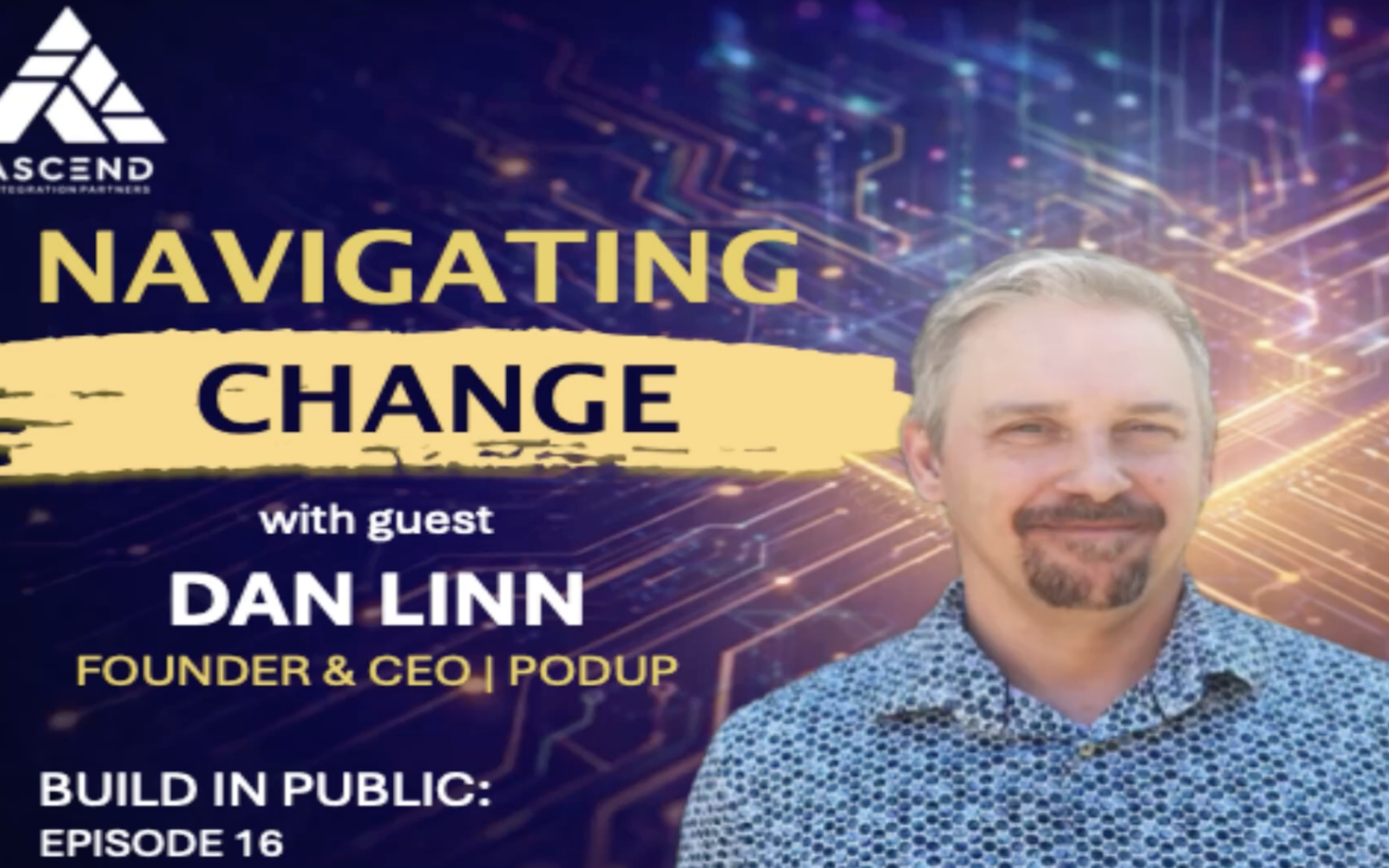

I recently joined Ascend Integration Partners to talk about how AI is changing software development, what we are building with Autotix.io, and how we are thinking about the future of Hello World. The conversation covered a few different angles, but they all came back to the same idea: AI is making it much easier to get started with software, but it does not remove the need to understand what you are building.
That distinction feels important right now because a lot of people are treating AI like it makes the hard parts of software go away. It does not do that. It makes some parts faster, more accessible, and less intimidating, especially for people who would not normally know where to begin. But once real users, real data, and real business operations are involved, the same old problems still matter.
AI is lowering the barrier to building
A few years ago, if you had an idea for an app, an internal tool, or some kind of workflow automation, getting started usually meant finding a developer or having enough budget to pay someone technical. That made a lot of ideas feel out of reach before anyone even had a chance to test them. AI changes that first step in a meaningful way because it can help people write code, understand errors, generate basic interfaces, connect services together, and move from an idea to a working prototype much faster than before.
That is a good thing for founders, operators, and small teams. More people can test ideas, automate repetitive work, and build tools for problems they understand deeply because they are the ones living with those problems every day.
The tradeoff is that easier access does not mean the work is automatically good, safe, or ready for production. It just means more people are going to be able to create software, including people who may not fully understand what is happening under the hood. That is where the difference between a prototype and a real product starts to matter.
The boring parts of software are getting automated
A lot of the conversation focused on how AI is changing the work around writing code. People usually talk about AI generating code, but there is a lot of software work that happens before and after that: error tracking, bug reports, code review, ticket creation, testing, log analysis, and figuring out what actually broke. None of that is especially exciting, but it is a big part of keeping software stable and usable.
That is the kind of problem we are working on with autotix.io. When an error happens, the goal is for AI to detect it, understand the context, create a useful ticket, and propose a fix without someone manually digging through logs, screenshots, Slack messages, and whatever else usually gets pulled into debugging.
This does not mean developers are unnecessary. It means developers can spend less time doing repetitive triage and more time solving problems that actually need their attention. The value is not in pretending AI can replace engineering judgment, but in using it to remove the manual work that slows teams down.
Companies need AI literacy, not AI theater
A lot of companies are still trying to figure out what AI means for them. Some are using it thoughtfully, while others are just trying to put AI into everything because they do not want to feel behind. I understand why that happens, but it usually leads to messy results.
The better approach is to understand what AI is actually good at. It can be useful for pattern recognition, summarization, prototyping, workflow automation, and speeding up repetitive tasks. It is not a replacement for business logic, security decisions, architecture, or accountability.
Companies still need people who can ask whether the output makes sense, whether the workflow should exist in the first place, and what happens when the AI gets something wrong. There are also practical risks that are easy to underestimate, including data privacy, security, and cost. Token-based pricing can get expensive quickly if teams are not paying attention to how often they are calling models or how much context they are sending.
Vibe coding is powerful, but risky
We also talked about “vibe coding,” which is basically using AI to build software by feel instead of by understanding. There is a real benefit to that because it helps people move quickly and makes software feel less intimidating. It lets someone explore an idea, build a rough version, and learn by doing instead of getting stuck before they even start.
The problem is that you can now build something that looks like a real product without knowing whether the authentication is secure, whether user data is protected, or whether permissions are handled correctly. That gap between how polished something looks and how reliable it actually is is going to matter more as more AI-built apps get shipped.
I think we are going to see a wave of software that looks impressive on the surface but is fragile underneath. Some of it will be fine for prototypes or internal experiments, but some of it will become real products before the technical foundation is ready. That does not mean people should stop using AI to build. It means they need to know when they are experimenting and when they are responsible for real users, real data, and real business operations.
Where Hello World is heading
This shift is also changing how we think about Hello World. We are not just trying to be a software services company that takes a spec, builds the thing, and moves on. More and more, we are becoming a technology partner for smaller companies that need help making smart decisions in a noisy environment.
A lot of businesses know they should probably be doing something with AI, but they do not know what that should actually look like. Sometimes that means building a new tool. Sometimes it means automating an internal workflow, improving an existing system, or deciding that AI should not be used in a certain part of the business yet.
That is where the fractional CTO side of Hello World becomes important. Smaller companies often need technical leadership as much as they need code, especially when the tools are changing this quickly. They need help understanding what is worth building, what should be handled manually, what can be automated, and what might create problems later.
The human part still matters
Even with all of this automation, the human side of software is not going away. AI can help write code, create tickets, summarize logs, draft documentation, and make teams faster, but it cannot replace trust or judgment.
It cannot fully manage a client relationship or understand the entire context of a business from one prompt. It also cannot navigate every tradeoff, priority, personality, and constraint that shows up in a real project. Those things still require communication, experience, and a real understanding of the people who are going to use what you build.
The teams that get the most out of AI will not be the ones that remove humans from the process. They will be the ones who use AI to handle repetitive work so people can spend more time on the parts that actually need people.
Final thoughts
AI is changing software development quickly. It is making software easier to start, prototypes faster to build, and small teams more capable than they were before. That is exciting, but it does not remove the need for discipline.
Building software that works, scales, stays secure, and supports a real business still requires someone to understand the system and the risks behind it. AI is a powerful tool, but it is still a tool. The companies that understand that will be able to move faster without creating unnecessary problems for themselves later.
Thanks to Build in Public for having me on. You can watch the full conversation here: https://www.youtube.com/watch?v=g1ylZ0xWjhg