
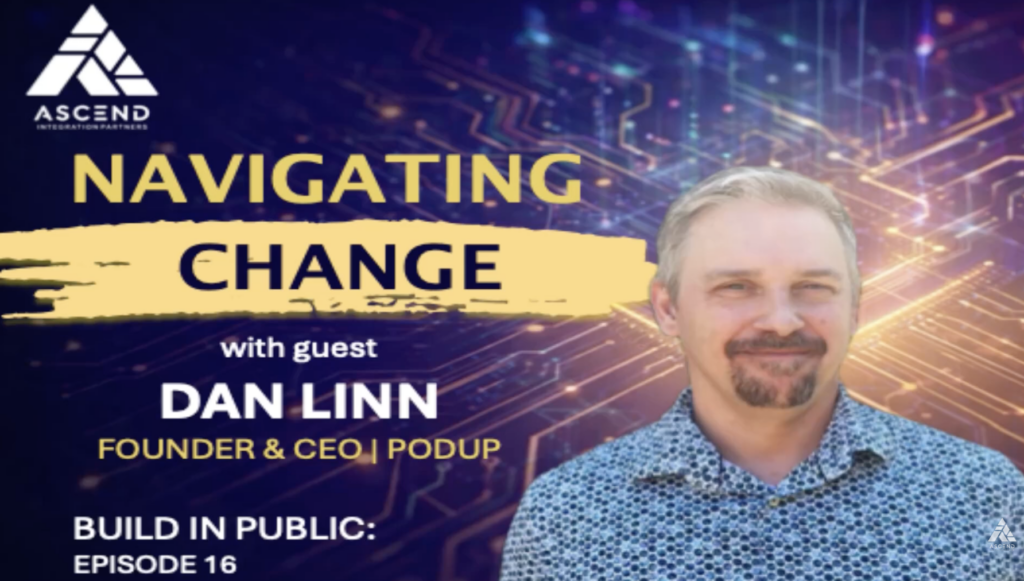
This article was inspired by Dan Linn’s recent appearance on Build In Public from Ascend Integration Partners.
In the episode, Dan joins host Troy Man to discuss AI-powered software development, automation, AI governance, AutoTix, and Hello World’s evolution from a development vendor into a long-term technology partners.
Artificial intelligence has changed the way software gets built. What once took weeks to prototype can now take hours. New ideas can be tested faster than ever before, and businesses have access to tools that were unimaginable just a few years ago.
But while AI has dramatically lowered the barrier to building software, it hasn’t eliminated the need for experienced technology partners. In many ways, it’s made that expertise even more valuable.
At Hello World, we’ve been thinking a lot about what this shift means for our clients and the organizations we support.
Building Software Is Easier. Building the Right Software Is Still Hard.
Today, almost anyone can use AI to generate code or create a working prototype.
That’s exciting.
It’s also creating a common misconception that software development has become “easy.”
Creating a prototype is only the beginning.
Moving an application into production requires architecture, security, testing, scalability, governance, and long-term maintenance. Those challenges haven’t disappeared. They’ve simply become more important as AI accelerates development.
The conversation is no longer about whether AI can write code.
It’s about whether the resulting solution is secure, maintainable, and built to support your business for years to come.
AI Should Amplify Expertise, Not Replace It
We view AI as one of the most powerful productivity tools ever created.
We use it every day.
But AI works best when paired with human judgment.
One way we explain it is this:
AI is an exceptional pattern finder. It’s a lot like how humans think. It can generate ideas, identify relationships, and accelerate problem solving.
But just as you wouldn’t replace a calculator with intuition when balancing your finances, you shouldn’t expect AI to replace systems that require precision, governance, or accountability.
The goal isn’t to let AI make every decision. The goal is to use AI to build better systems.
Start Small. Deliver Real Value.
Many organizations feel pressure to “do something with AI.”
Instead of trying to automate everything at once, we encourage companies to start with a simple question:
What repetitive task consumes valuable time every week?
Reporting is often the perfect place to begin.
If employees spend time gathering information from multiple systems to produce the same weekly report, that’s an opportunity for automation.
These kinds of projects create immediate value, demonstrate measurable ROI, and help organizations gain confidence before expanding into larger AI initiatives.
AI Governance Matters More Than Ever
One of the biggest risks organizations face isn’t the technology itself.
It’s how people are using it.
Employees are increasingly experimenting with public AI tools without understanding what information they’re sharing or where that data goes.
We’ve seen organizations unintentionally expose sensitive information, confidential business data, and internal processes simply because employees weren’t given clear guidance.
Successful AI adoption requires more than new software.
It requires education, policies, and governance that help employees use these tools responsibly.
The Hidden Cost of “Free” AI
AI makes building software faster. It doesn’t make software maintenance disappear.
Applications still require updates.
Security threats continue to evolve.
Infrastructure changes.
Dependencies become outdated.
Automation itself requires maintenance.
Organizations that only calculate how much time AI saves often overlook the ongoing investment required to keep those systems reliable over time.
That’s why successful AI strategies balance speed with sustainability.
From Vendor to Technology Partners
The role of a technology partner is changing.
Our clients aren’t simply looking for developers who can build software.
They’re looking for trusted advisors who can help them navigate a rapidly changing technology landscape.
That means helping organizations:
- Identify practical AI opportunities.
- Build secure and scalable solutions.
- Establish AI governance and best practices.
- Automate repetitive operational work.
- Provide strategic technology leadership through consulting and fractional CTO services.
Technology is moving faster than ever.
Having someone who understands not only how to use AI, but when to use it, is becoming one of the most valuable investments a business can make.

Looking Ahead
Artificial intelligence isn’t replacing software development.
It’s changing the nature of the work. The organizations that thrive won’t necessarily be the ones using the most AI. They’ll be the ones using it intentionally, responsibly, and strategically.
At Hello World, we believe the future isn’t about replacing people with AI. It’s about helping people build better technology with it.